Skip to Main Content
WCU Program - Master in Environmental Management

Innovate for a sustainable future in environmental leadership.

Through experiential learning and project work with organizations in the Rocky Mountains and worldwide, students earning a Master’s in Environmental Management (MEM) at Western Colorado University enhance their skills to tackle environmental problems and craft careers with agencies, non-profits, and for-profit organizations.

A student sweeps using a bug net in a wet meadow restoration area.

What is MEM?

What makes our program unique?

Why is environmental management important?

What are the residential and distance learning options?

Choose a Certificate Alongside Your MEM

Western’s graduate certificates provide focused, career-relevant training for students and professionals seeking advanced expertise in today’s most pressing environmental challenges. Each certificate can be completed as a stand-alone credential or stacked into the Master of Environmental Management (MEM) degree. Designed for working professionals and graduate students alike, these certificates combine interdisciplinary coursework, applied problem-solving, and real-world environmental management practices. Certificates may be completed by distance or residential students, although some field-course options may require in-person attendance, creating a dynamic learning community connected to environmental challenges across the American West and beyond.

Integrative Land Management
A female student uses a device to test a biological sample from a pond.

Integrative Land Management

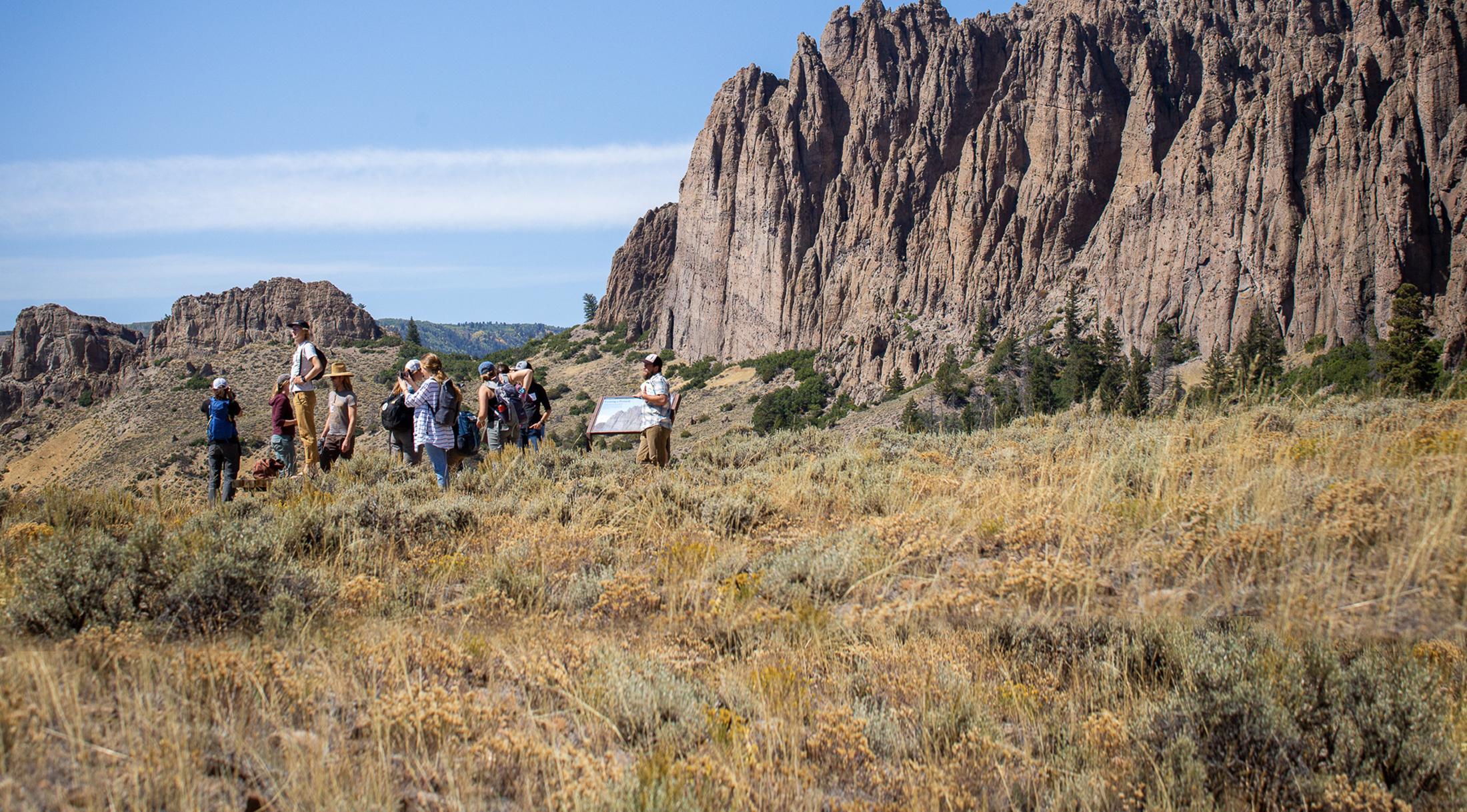
The Integrative Land Management Certificate trains professionals to manage landscapes where conservation, agriculture, recreation, and development intersect. Students gain interdisciplinary skills in land-use planning, natural resource policy, and collaborative management, preparing them to make informed decisions that balance ecological health, economic use, and community priorities.

Integrative Land Management
Community Reslience
Two MEM students prune plants in the Chipeta Garden.

Community Resilience

The Community Resilience Certificate equips professionals to help communities adapt and thrive amid environmental, social, and economic change. Students gain skills in climate adaptation, collaborative governance, environmental justice, and systems thinking, learning to design strategies that strengthen community and landscape resilience.

Community Reslience
Ecosystem Restoration
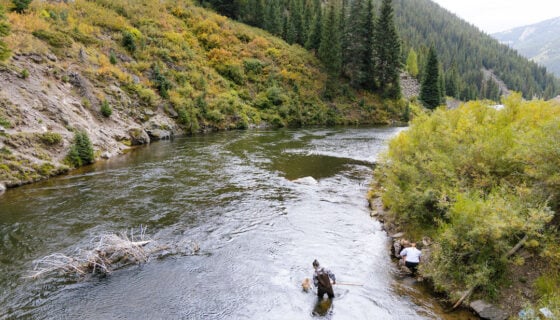
A wide landscape shot of a student collecting insect samples on the Taylor River.

Ecosystem Restoration

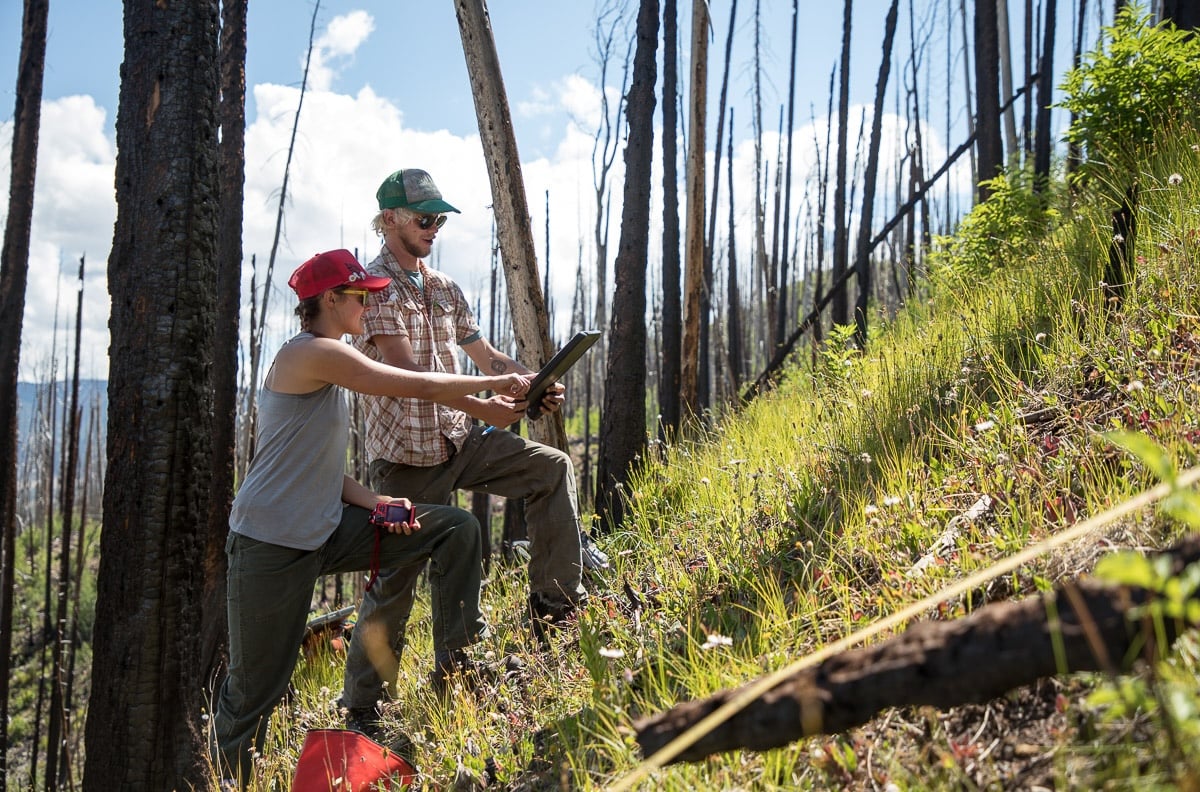
Designed for graduate students and working professionals, the Ecosystem Restoration Certificate builds technical skills in water resource assessment, ecological monitoring, and hands-on restoration techniques. Students gain a deep understanding of ecosystem processes, habitat restoration strategies, and adaptive management practices.

Ecosystem Restoration
Forests, Fires & Fuels
Content Card Image

Forests, Fires & Fuels

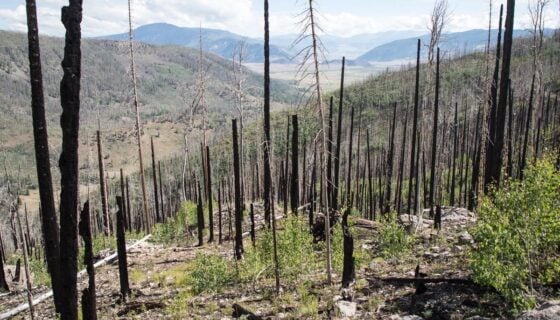
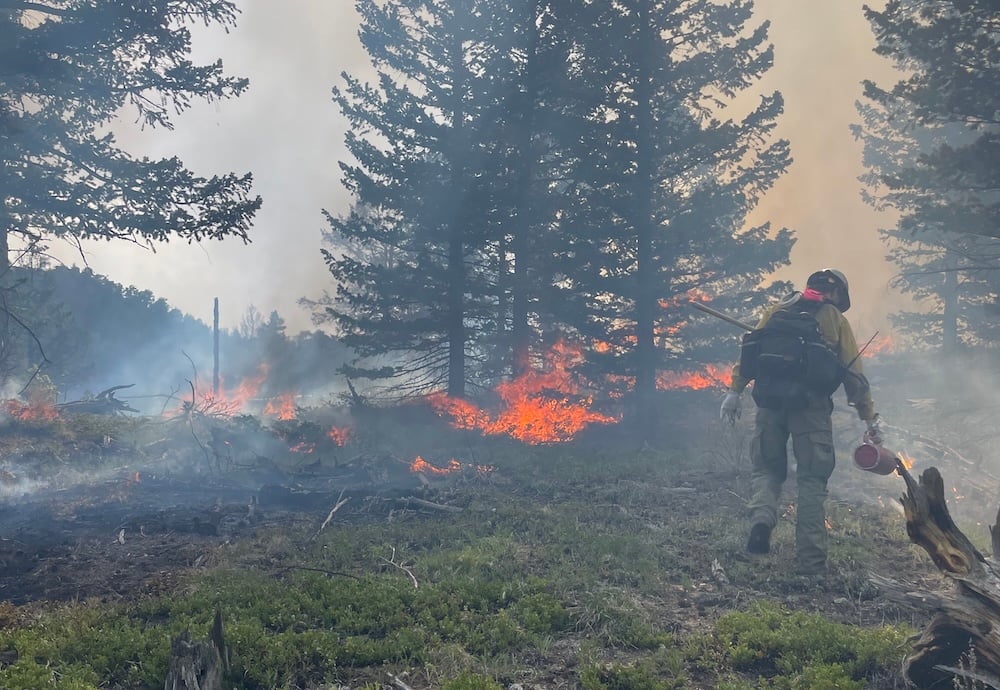
The Forests, Fires, & Fuels Certificate prepares professionals to address wildfire risk and promote resilient forest ecosystems. Students learn fire ecology, fuels management, forest restoration, and collaborative wildfire mitigation strategies, gaining practical skills to protect landscapes and communities.

Forests, Fires & Fuels
Mine Reclamation Management
A field of wildflowers with mountains in the background during sunrise.

Mine Reclamation Management

The Mine Reclamation Management Certificate trains professionals to restore and manage lands affected by mining. Students gain expertise in soil reconstruction, water management, revegetation, regulatory compliance, and long-term site stewardship, skills that prepare students for real-world application.

Mine Reclamation Management

Areas of Study

Experiential Learning

Admissions, Cost, Requirements

Admissions
Tuition & Costs
Program Requirements

MEM Application Requirements

Application Requirements

  • Bachelor’s degree in any academic program.
  • GRE test scores are NOT required to apply.
  • Official academic transcripts showing a recommended 3.0 undergraduate GPA or above in relevant courses. To avoid delay please request an official copy from your previous college or university to be sent directly to Western’s Graduate Studies (graduatestudies@western.edu). You can also request them from Student Clearing House.
  • One-page Statement of Purpose describing your intellectual and professional interests in environmental management and potential idea for a master’s project, submitted within the online application.
  • Answer six short essay questions within the online application.
  • Upload a resume or one-page document that outlines your past environmental employment, leadership, and volunteer experience.
  • Two letters of recommendation from professors or supervisors in related fields.
  • If you plan on attending from a distance: As part of your application, you’ll be asked whether you plan to attend as a residential or low-residency student. If you select the low-residency option, please briefly describe how you will stay engaged in environmental management work or related activities while completing your degree from a distance. Share how your experiences will support your learning, professional growth, and contribute to the perspectives within your cohort. Be sure to include the timeframe during which you plan to pursue the low-residency path. Low-residency students are fully integrated into courses, projects, and learning activities alongside residential students.

Admittance into the MEM requires a BA or B.S. degree and the following prerequisites, which must be completed no later than the end of the first fall term:

  • College-level statistics course
  • Two, college-level, natural or environmental science courses (Biol, Geol, Envs, Phys, Chem, Sci)
  • Two, college-level, social science courses

*Please note that strong applicants missing prerequisites may be provisionally admitted with some prerequisites, such as statistics, being able to be completed for free online prior to beginning the program or by the end of the first fall term. Please also note the 3+2 pathways available to Western undergrads.

Application Deadlines

  • Applications are accepted year-round with a preferred deadline of February 15th. Students can enter the program at the beginning of the fall (late August) or spring term (the second full week of January).
  • Residential and distance options for the two-year degree available.
  • Find out more information on the MEM program prerequisites.

If you have any questions about the application process, please contact MEM.

MEM Tuition & Fees

Term Credits Tuition per Credit Fees per Credit* Flat Fees** Total Tuition & Fees
Year 1: Fall 9 $847.00 $73.40 $50.00 $8,333.60
Year 1: Spring 9 $847.00 $73.40 $8,283.60
Year 2: Fall 9 $847.00 $73.40 $8,283.60
Year 2: Spring 9 $847.00 $73.40 $8,283.60
Program Total 36 $33,184.40

*Mandatory graduate student fees per credit hour
$63.00 Graduate Studies Administrative Operations Fee
$6.50 Library Fee
$3.90 IT Services Fee

**Mandatory graduate student flat fees
New Student Matriculation Fee: $50.00 Charged in the Fall Semester

Master in Environmental Management

A master’s degree is an advanced qualification earned after completing a bachelor’s degree. It focuses on a specific area of study and provides specialized knowledge and skills. To complete a master’s degree, students must fulfill core coursework, elective requirements, and often a final project, thesis, or practicum.

How to Apply to MEM

We are so excited about your interest in applying to MEM! Please take a moment to review the requirements and deadlines before accessing the application.

Financial Aid

Western’s tight-knit community and value of stewardship set me up for success and the opportunity to share what I am passionate about.

Megan Yost
Master in Environmental Management (MEM)
Megan Yost
1

Top Skills

Project Leadership and Coordination
Sustainability Planning
Community Engagement and Education
Natural Resource Management
Data Analysis and Research
Environmental Policy and Analysis

2

Career Pathways

Executive Director
Sustainability Coordinator
Forestry Program Coordinator
Carbon Analyst
Wildlife Biologist
Renewable Energy Market Analyst
Environmental Restoration Planner

Explore Alumni Careers

Faculty & Staff

Rebecca Anderson

Program Assistant for MEM and OSP

Jared Balik, PhD

Post Doctoral Research Associate

Gillian Bauer, MEM

Lecturer in Environment and Sustainability

Hannah M. Carroll, PhD

Assistant Professor of Environmental Science and Ecology

Kate Clark, PhD

Assistant Professor of Environment & Sustainability, Center for Cold Climate Food Security Director

Jonathan Coop, PhD

Professor of Environment and Sustainability

Kindra Jesse De’Arman, PhD

Assistant Professor of Environment and Sustainability

Lindsay Dolezal

Program Facilitator and Grants Administrator

Briget Eastep, PhD

Center for Public Lands Director and Associate Professor

Alex Finkelstein, PhD

Lecturer in History

Nate T. Gore, MEM

Lecturer of Recreation & Outdoor Education and Environment & Sustainability, Undergraduate Director

Karen Hausdoerffer, MFA

Lecturer in Environment & Sustainability, Graduate Writing Workshop Director

Madelon Van de Kerk, PhD

Director of MS in Ecology; Assistant Professor of Wildlife Ecology

Salif P. Mahamane, PhD

Associate Professor of Psychology; Graduate Faculty for MEM, Graduate Faculty and Outdoor Industry MBA

Dominique Naccarato, MEM

MEM Director

Julie Nania

Coldharbour Institute Director & Faculty Lecturer

Micah Russell, MS, PhD

Clark Family School Dean

Rich Stromberg, MEM

MEM Lecturer and Graduate Mentor

Ricardo Vazquez-Perales, PhD

Assistant Professor of Environment and Sustainability, Sustainable and Resilient Communities Director

Susan Washko, PhD

Lecturer

Brooke Ann Zanetell, PhD

Assistant Professor of Public Land Management

Master in Environmental Management

Contact Information

Mountain Graphic